Research and evidence
A collection of research focusing on the most prominent subjects relating to young onset dementia, gathered by members of the Young Dementia Network Steering Group and other experienced researchers.
Ziyue Wang, School of Nursing, Midwifery and Evidence Science, University of Galway, Ireland
Though less common than late onset dementia, young onset dementia can be more challenging to diagnose and manage.
‘Young onset’ dementia is where symptoms develop before the age of 65. When symptoms begin, many people are busy with work, raising children, and taking part in community life. Because of this, young onset dementia can affect many aspects of life, including memory, confidence, friendships, family roles, work, finances, and the interest to stay involved in everyday life.
Social health means being able to stay connected, take part in meaningful activities, maintain independence, feel valued, and have a voice in decisions. It is not only about whether someone is alone, it is also about belonging, purpose, confidence, and being included.

Our recently published study explored the social health experiences and support needs of people living with young onset dementia in Ireland and the UK. We interviewed 12 people aged between 56 and 64 who were living at home. They had experiences of social health challenges.
We are still ourselves
One of the strongest messages from the study’s findings was that people living with young onset dementia want others to recognise their capacities, not only their diagnosis. People spoke about wanting to stay independent, make choices, and continue doing the things that mattered to them. Some activities had become more difficult, but they found ways to manage, adapt, and contribute. One participant said, “I’m still me.” This simple sentence captures an important message. Dementia does not remove a person’s identity, value, or right to be involved in decisions about their life. They also wanted professionals and services to speak directly to them. People living with young onset dementia wanted to be asked what they needed, rather than what others assume for them. This is a clear reminder for everyone working in dementia care: include the person, listen to them, and respect their voice.
Connection can bring strength and hope
Although some participants experienced loneliness or reduced social contact, many described strong efforts to stay connected. They visited neighbours, joined groups, spoke with peers, took part in research, and supported public awareness. For some people, peer support was especially valuable. Being with others who understood young onset dementia helped people feel less alone. It created a space where they could talk openly, share practical tips, and feel accepted. This shows that social connection is not a small detail in everyday life. It can support confidence, identity, and wellbeing. The right support can help people continue to take part in family and community life.
Positive information matters after diagnosis
Several participants said that information about dementia often feels frightening or negative. They wanted honest information, but they also wanted hope. People need to know what support is available, what steps they can take, and how they can continue living a meaningful life. Diagnosis should not be the end of support. It should be the beginning of clear, kind, and practical support. This is especially important for people with young onset dementia, who may still be working, actively parenting, or managing many responsibilities in the community. Early information can help people plan, adjust, and feel less alone.
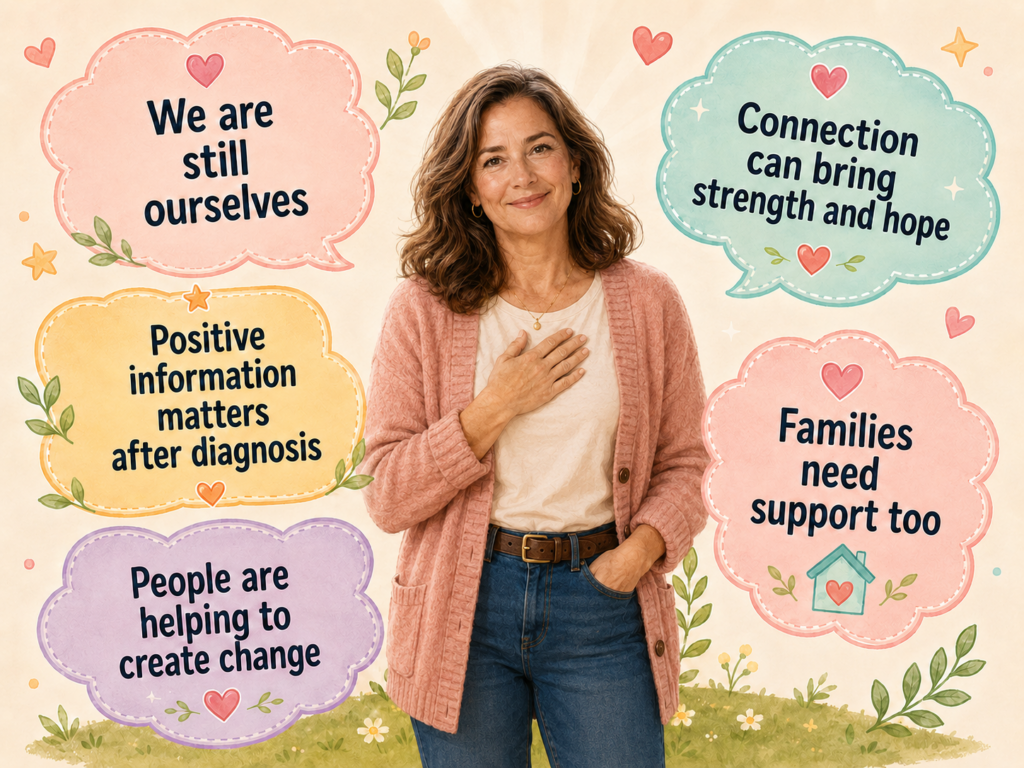
Families need support too
Young onset dementia affects the whole family. Some participants had children who were still at school when they were diagnosed. They wanted guidance on how to talk with children about dementia in a calm and age-appropriate way. They pointed out that families may also need emotional and financial support. Supporting family members can help them continue supporting the person with dementia. It can also protect relationships and reduce stress at home. A positive approach to young onset dementia should therefore include the person and the people close to them.
People are helping to create change
A very encouraging finding was that many participants were already working to improve understanding of young onset dementia. Some gave talks, took part in research, advised services, or helped raise public awareness. They wanted the public to understand that dementia can affect younger people too. They also wanted communities, services, transport, shops, and public spaces to become more dementia-friendly. This shows that people living with young onset dementia are not only people who receive support. They are also advocates, educators, experts by experience, and leaders for change.
What can services do better?
Dementia support and services should build on people’s strengths and support their social lives. This means:
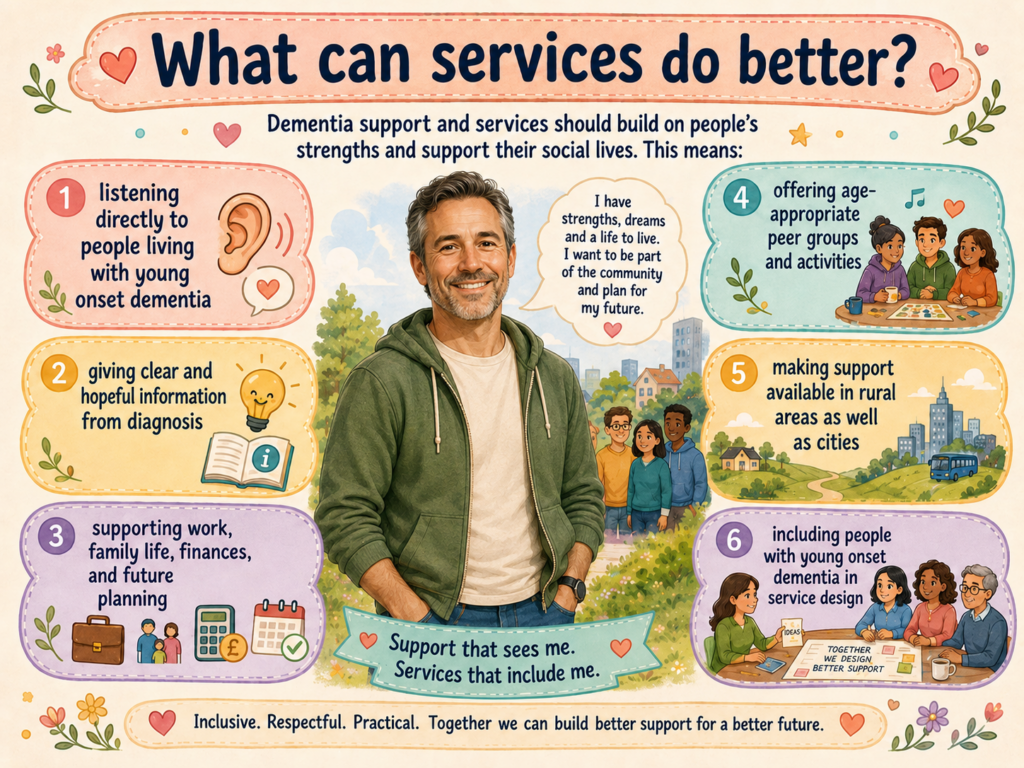
This study has a clear message: better support starts by listening. Young onset dementia brings challenges, but it also brings stories of courage, adaptation, connection, and advocacy. People in the study wanted to stay involved, stay connected, and be recognised for who they are.
Their message is clear: ask us, listen to us, include us, and work with us to build better support.
Published as Social health experiences and support needs of people living with young onset dementia: a qualitative study
Ziyue Wang is a PhD candidate in the School of Nursing, Midwifery and Evidence Science at the University of Galway, Ireland. Her topic focuses on social health in people living with young onset dementia.
Ziyue is a member of the INTERDEM Academy that has members across Europe, and actively contributes to the INTERDEM TaskForce, including young onset dementia, social health and dementia inequalities. She is also a member of the Psychosocial Dementia Research Group based at the University of Galway. In addition to her PhD project, Ziyue actively contributes to research on dementia care, dementia inequalities, young dementia carers, and frailty. Ziyue has experience with patient and public involvement, and organised an awareness event on young onset dementia in October 2025.
June 2026
A collection of research focusing on the most prominent subjects relating to young onset dementia, gathered by members of the Young Dementia Network Steering Group and other experienced researchers.
An introductory guide to help you find and understand research on young onset dementia.
Do you know of a young onset dementia research study for inclusion in our collection?